
With Missouri overdose rates on the rise, federal funds for Narcan dry up
From January 2019 to January 2020, 1,597 Missourians died from overdoses. Over the next 12 months, that number increased to 1,952, according to data from the Centers for Disease Control and Prevention.
 ( Updated: )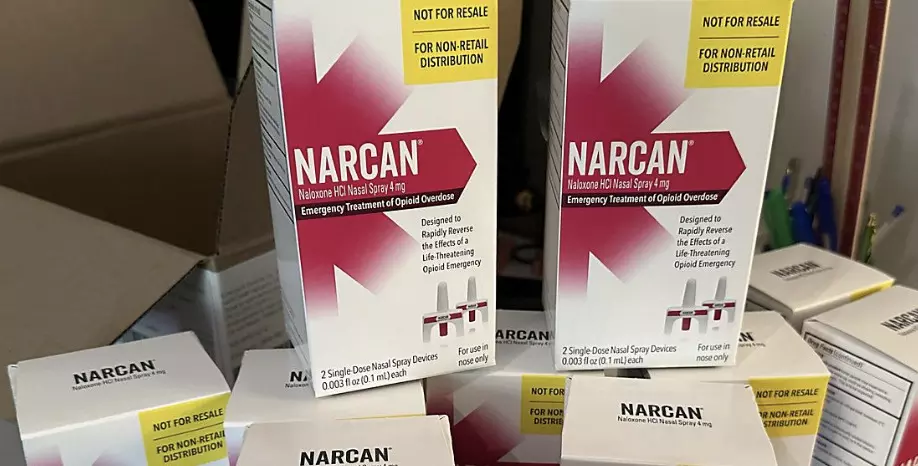
Since 2016, the state of Missouri has relied on a federal grant to help purchase and distribute naloxone, often known as Narcan, a life-saving treatment that can reverse potentially fatal overdoses. That grant has expired, leaving treatment providers without a centralized resource to turn to for the medicine.
With no long-term replacement for the same sort of grant money, providers say the loss of some of Missouri's Narcan resources could worsen the state's drug overdose crisis. In 1999, the rate of drug overdoses that ended in death was 5%. By 2020, the rate increased to 32.1%.
"We've had to – and I'm sad to say – we've had to kind of hold back on who we are giving Narcan to, because we don't want to run out for whenever we need it," said Mirna Herrera, the special projects coordinator the Mid-America Addiction Technology Transfer Center Network and Truman Medical Center Behavioral Health.
The grant, from the federal Substance Abuse and Mental Health Services Administration, provided $1 million a year and funded the MO-Hope Project.
MO-Hope, which was coordinated by the Missouri Department of Mental Health and the Missouri Institute for Mental Health at the University of Missouri-St. Louis, paid for training and education resources on the use of Narcan. The collaboration was also the hub for groups across Missouri to get free Narcan to distribute in their communities.
End of federal funds leaves Missouri without a reliable cash flow for harm reduction resources
The grant wrapped up in August. Since then, groups across the state have shifted the ways they source Narcan.
"We certainly have felt concerned because MO-Hope had such high name recognition and they really had been the primary driver of naloxone distribution in the state," said Emily Hage, CEO of First Call Alcohol/Drug Prevention.
From January 2019 to January 2020, 1,597 Missourians died from overdoses. Over the next 12 months, that number increased to 1,952, according to data from the Centers for Disease Control and Prevention.


